Donate or Sell Unused Diabetic Supplies?
We buy sealed diabetic supplies for cash. We do not sell supplies.
Whether to donate or sell comes down to the box and what you want. Donating gets supplies straight to someone who needs them. Selling gives you money back. Many people do a bit of both.
Selling? See everything we buy.
This page is general information, not medical or legal advice. Talk to your doctor or pharmacist about your own care.
Either way, start by sorting what you have. Here's how to decide for each box.
When does donating make sense?
Donating is a good fit when:
- You want the supplies to go straight to someone who needs them.
- A program you trust will accept the items you have.
- The supplies came through a program that doesn't allow resale, and the group can still take them.
- You'd rather not deal with photos, quotes or shipping.
Always call first. Rules change, and many groups only take sealed, unexpired boxes. Some can't take certain products at all.
Donating also has a quiet upside. It can help someone who can't afford their supplies right now. If that matters most to you, it may be the right call even for boxes a buyer would take.
If you'd like a record of what you gave, ask the group for a simple receipt. Some offer one and some don't, so ask before you drop things off.
Where can you ask about donating?
Start close to home. Good places to call include:
- Free clinics and community health centers near you
- Diabetes nonprofits and support groups
- Your doctor's office, which may know a local group
- Your pharmacist, who may know who takes supplies
Ask what they accept before you drive over. Bring a list of what you have, with counts and dates.
When you call, have these answers ready:
- What the product is, like a CGM sensor or test strips
- How many boxes you have
- The date on each box
- Whether the boxes are sealed
Then ask if they have a drop-off time. Some groups only take items on certain days.
That makes the call short. It also helps the group say yes or no right away, so you don't make a trip for nothing.
When does selling make sense?
Selling is a good fit when the boxes are:
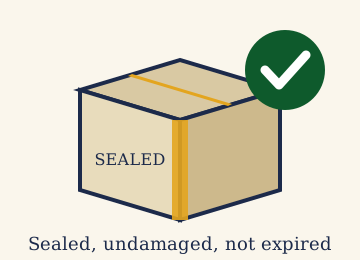
- Sealed, with the seal whole.
- Not expired, ideally with plenty of time left.
- Not marked "NOT FOR RESALE."
- Not paid for by Medicare or Medi-Cal.
We don't buy supplies paid for by Medicare or Medi-Cal. See what we buy for the full list.
Selling also makes sense when you have a lot. A big lot can be a real help with bills, and buyers can often take more than a small clinic can store.
Selling also lets you set the pace. You can ask for a quote, think it over and say no if it doesn't feel right. We never charge a fee to get a quote.
Selling takes a little more work. You'll take photos, get a quote and either meet up or ship the boxes. In San Bernardino and Riverside County, we meet at a public place and pay cash, Zelle, Venmo or PayPal. Anywhere else in the U.S., you can mail them in after you accept a written quote.
Can you donate or sell both?
Yes. Many people sell sealed boxes a buyer will take, and donate the rest to a group that wants them.
Here's a simple way to split things:
| Item | Donate | Sell to us |
|---|---|---|
| Sealed and in date | Yes, if accepted | Yes |
| Opened box | Ask first | No |
| Medicare or Medi-Cal paid | Ask the program | No |
| "NOT FOR RESALE" | Ask first | No |
| Expired | Usually no | No |
Medicare and Medi-Cal supplies need extra care. Ask the program or your supplier what to do with extras, and ask them to lower future shipments.
Expired supplies are hard to place anywhere. The FDA warns that expired test strips can give incorrect results.
A real-life example
Say your aunt switched CGMs and left you a bag of supplies. Inside are ten sealed sensor boxes, two opened boxes and a few vials of strips marked "NOT FOR RESALE."
You call a free clinic first and read them your list. They can use the strips, so those go there. The opened boxes aren't something they or a buyer can take.
The ten sealed sensor boxes are in date and were paid for by her private plan. You take photos and ask for a quote. Everything that can help someone finds a home. The opened boxes go back to your aunt's doctor to ask about, and nothing sealed goes in the trash.
How do you get ready?
Whatever you choose, these steps help:
- Sort sealed from opened.
- Check each date. Our guide on finding the REF, LOT and expiration date shows where to look.
- Note who paid for each box.
- Write a list with the product, count and date.
Used needles and lancets aren't for donating or selling. The FDA says to put them in a sharps container right after use.
Should you decide quickly?
Yes. Supplies lose value as the date gets closer, and a clinic can do more with a box that has a year left than one with a month left.
Store boxes in a cool, dry place while you decide. Never leave them in a hot car. Then pick a plan within a few weeks, so nothing expires on the shelf.
If you can't decide, split the difference. Sell the boxes with the most time left, and donate the ones a buyer can't take. That way, each box goes where it does the most good.
Keep reading
Questions
Is it better to donate or sell diabetic supplies?
Both are good choices. Donating helps someone directly, and selling gives you money back.
Can I donate opened supplies?
Some groups might, but many don't. Call first and ask.
Can I sell supplies Medicare paid for?
We don't buy supplies paid for by Medicare or Medi-Cal. Ask the program about your options.
Can I do both?
Yes. Many people sell sealed boxes and donate items a buyer won't take.
Ready to sell your sealed boxes?
If you've decided to donate or sell, and selling fits some of your boxes, we can help. We buy sealed, unexpired CGM sensors, Omnipod pods and test strips, and we never charge a fee. Send a photo of each box for a free quote.